Table Of Content
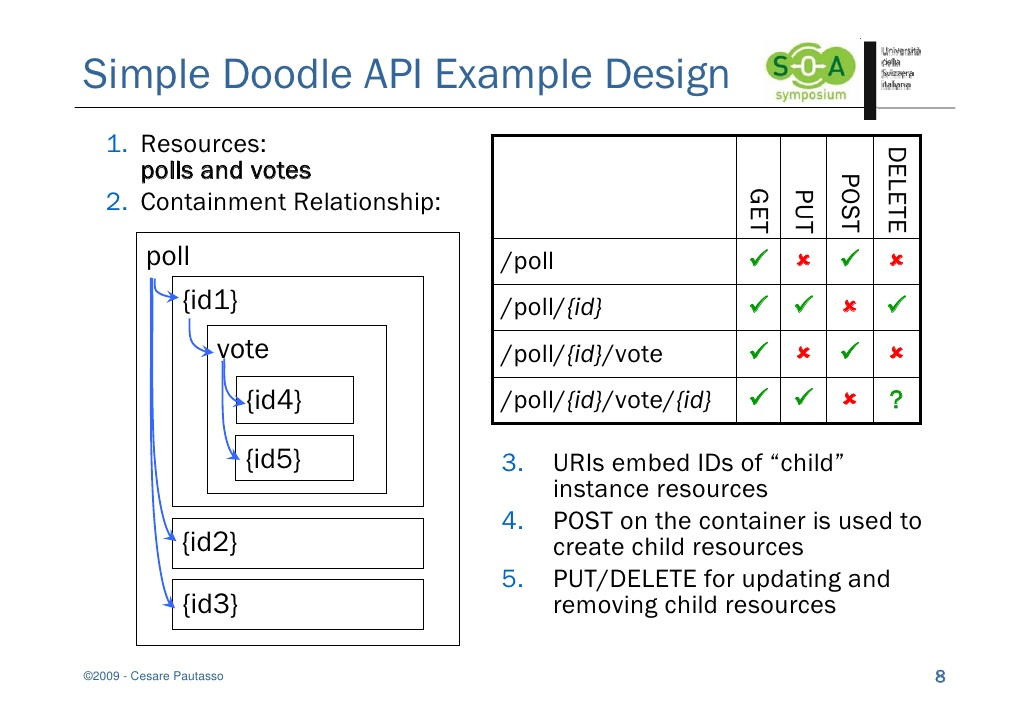
When it comes to naming resources in REST APIs, consistency is key. A crucial aspect of this is the use of nouns as ‘resource identifiers’ in URIs to specify the contents of the resource clearly. Consistent naming conventions for these resource identifiers facilitate predictability and ease of use, leading to fewer errors and quicker developer integration.
API Versioning
You wouldn’t want to be returning an error response with a status code that does not correspond to the error. This is a better approach, the client would know that we are dealing with the collection of data involving users and not just one user. There isn’t a single approach to API design that will work for every organization. The above suggestions are just that — advice and recommendations which can be used or discarded depending on your user case and requirement.
Versioning Strategies
As you can see, we've added the two properties "memberId" and "member" to our records inside the database. This has the huge advantage that we don't have to nest deeper our existing endpoint. The endpoint now becomes less manageable the more nesting we add to it. Therefore it's a good practice to store the URI to receive information about a member directly into the record. We've already implemented the endpoints correctly without using verbs inside the URL, but let's take a look how our URL's would look like if we had used verbs. Every error that gets thrown inside our Workout.createNewWorkout() method will be caught inside our catch block.
Versioning through URI Path
If you have an API style guide, you may be able to use a linter to catch that singular endpoint before it goes live. Consistency leads to a better developer experience and a greater likelihood that your API won’t need major changes. This has also helped avoid the need for "experience APIs" (see response above) layered on top of our API.

We'll also need a record router to catch the specific requests for the records, but we don't need it right now. This could be a great chance for you to implement the CRUD operations for the records with their own routes and train a bit. Chances are high that have we to implement CRUD endpoints for the records as well, because records should be added, updated or deleted in the future as well. In our Crossfit API we will take a look at the creation endpoint and see what errors might arise and how we can handle them. At the end of this tip you'll find again the complete implementation for the other endpoints. Let's go into our workout service and receive the data inside our createNewWorkout method.
RESTful API Designing guidelines — The best practices - hackernoon.com
RESTful API Designing guidelines — The best practices.
Posted: Fri, 25 Mar 2016 07:00:00 GMT [source]
Take close look at the bottom of our comment under "items". We're using "$ref" to create a reference and are referencing the path to our schema we've defined inside our workout file. Typically this definition will be inside your schema or model file where you've defined your database models. Because we've planned to have different versions of our API, the docs will be a bit different, too.
The 5 essential HTTP methods in RESTful API development - TechTarget
The 5 essential HTTP methods in RESTful API development.
Posted: Fri, 25 Aug 2023 07:00:00 GMT [source]
The API queried the database for a table and then searched the table for detailed data. The seller (acting as the API) queried the shelves (the database) for the requested data. This guide is a living document and additions to it will be madeover time as new style and design patterns are adopted and approved. In thatspirit, it is never going to be complete and there will always be ampleroom for the art and craft of API design. This guide applies to both REST APIs and RPC APIs, with specific focus on gRPCAPIs. GRPC APIs use Protocol Buffers to define their API surfaceand API Service Configuration to configure their API services, includingHTTP mapping, logging, and monitoring.
SSL/TLS security is a common and affordable way to make sure every request and response is encrypted over the channels. There are methods to improve API design — like following RESTful practices. But time and again we are seeing customers unknowingly program minor inconveniences into their APIs.
So basically a REST API is simply creating a medium that involves a set of rules that gives different programs access to communicate with each other. Monetize your AI model by transforming it into an AI API, creating new revenue streams by integrating your AI capabilities into other applications. Documenting changes in each API version is critical for effectively managing versioning. Special characters in URIs can be likened to bumps on a smooth road, causing confusion and increasing technical complexity.
All great things start with a plan, including building an API. Imagine an external user wants to query the user table by sending an ID, and the API method you designed uses the POST method. This will limit the users' queries as the end-user isn't adding or creating data, and the user can not query the way they should be able to. As data sometimes contains sensitive information like credit card information, we have to keep the communication between server and client totally private.
When something goes wrong (either from the request or inside our API) we send HTTP Error codes back. I've seen and used API's that were returning all the time a 400 error code when a request was buggy without any specific message about WHY this error occurred or what the mistake was. If you try to add the same workout for a second time, you still receive a 201 status code, but without the newly inserted workout. Let's think about an endpoint where we need to receive JSON data from the client.